
Every spring, the same debate erupts in dog owner groups on Facebook and Instagram: pipette or natural protection? Chemical collar or essential oils? In 2026, this question is more relevant than ever – the number of dog owners looking for alternatives to synthetic products is growing steadily. This article gives you an honest look at both sides. In the end of the article you will find a recipe for homemade spray!
Why Does Antiparasitic Protection Matter?
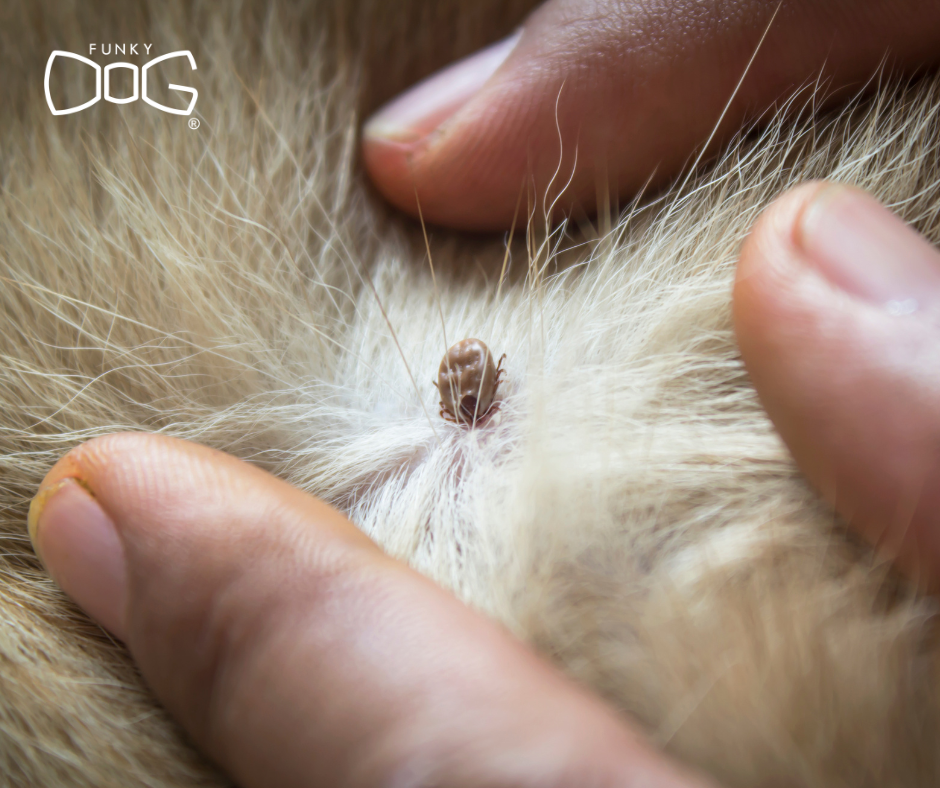
Ticks and fleas are more than just annoying guests. Ticks transmit Lyme disease, babesiosis, and ehrlichiosis – diseases that can be a serious threat to your dog. Fleas cause allergic dermatitis, carry tapeworms, and can colonize an entire household within weeks. Protecting your dog from parasites is a fundamental responsibility of every owner.
Chemical Antiparasitics: How They Work and What They Offer
Chemical products – pipettes, tablets, collars, or sprays – contain synthetic active substances such as fipronil, imidacloprid, fluralaner, or afoxolaner. These substances act on the nervous system of parasites, killing them or preventing them from attaching.
Advantages of Chemical Protection
- Fast onset of action – usually within 24–48 hours.
- Scientifically proven efficacy in clinical studies.
- Long protection period – pipettes work for 4–8 weeks, collars up to 8 months.
- Easy to access with standardized dosing.
- Suitable for dogs with high parasite exposure (hunting, breeding, shelters).
Disadvantages of Chemical Protection
- Synthetic substances can irritate skin and cause local reactions.
- Burden on liver and kidney function with long-term use.
- Not suitable for weakened, sick, or allergic dogs.
- Risk in the household – must not come into contact with children's skin or cats.
- Persist in the environment and can burden the ecosystem.
- Growing resistance of parasites to some active substances.
Natural Antiparasitics: How They Work and What They Offer
Natural protection is based on the repellent effect of essential oils, plant extracts, and biologically active substances. Instead of destroying the parasite's nervous system, it aims to create an environment that is unattractive to them – through scent, skin pH, or lymph composition.
Advantages of Natural Protection
- Gentle on skin and digestive tract – suitable for sensitive dogs, puppies from 12 weeks, and seniors.
- Safe in households with young children – no toxic residues on the coat.
- No burden on liver and kidneys.
- More environmentally friendly production and use.
- Multifunctional – essential oils also act antibacterially and antiseptically.
- Dogs generally tolerate the products better.
Disadvantages of Natural Protection
- Slower onset of action – protection builds up over 2–3 weeks of regular application.
- Requires discipline – daily application is needed at the start.
- Less suitable as the sole protection under extreme exposure (hunting, shows).
- Effectiveness depends on the quality of raw materials and correct formulation.
- Not regulated as a veterinary medicine – product quality on the market varies.
How Do Natural Antiparasitics Actually Work?
The foundation is essential oils with high content of antiseptic and repellent compounds. Most commonly used are lavender, rosemary, tea tree (in low concentrations), eucalyptus, or geranium. These substances are applied to the skin (withers or base of the tail) and gradually absorbed. They influence the composition of lymph and the animal's scent profile – ticks and fleas approach animals primarily through smell, and the animal simply becomes unappealing to them.
It's important to understand: a natural antiparasitic doesn't work like an "off switch". It works as a gradual impregnation. That's why in the first 14–21 days a tick may still attach – but gradually, attachment becomes less frequent and eventually the animal becomes unattractive to parasites.
Lesní Kapka (Forest Drop) by Ecopets: Natural Serum
In our Funky Dog e-shop we offer the serum Lesní kapka (Forest Drop) by Ecopets – one of the best-rated natural antiparasitics on the Czech and Slovak market (183 reviews, average 4.7/5).
The serum is made exclusively from BIO certified oils:
- Bio almond oil (Prunus Amygdalus) – carrier that reliably penetrates the skin.
- Bio lavender oil (Lavandula Angustifolia) – repellent and calming effects.
- Bio rosemary oil (Rosmarinus Officinalis) – antiseptic, stimulates blood circulation.
- Bio tea tree oil (Melaleuca Alternifolia) – in a safely low percentage, strongly antibacterial.
The serum is suitable from puppy age (from 12 weeks), for allergic dogs, dogs with sensitive skin, and in households with young children. Production takes place in a BIO certified facility in the Czech Republic, with oils going directly from the supplier to production – preserving maximum quality.
Recipe: DIY Natural Spray Against Ticks and Fleas
Want to try natural protection at home? Here's a simple recipe for a DIY spray you can use on your dog's coat and as a repellent for the whole family on nature walks.
You will need:
- 100 ml distilled water or hydrolat (lavender or rosemary)
- 1 teaspoon apple cider vinegar (adjusts pH and strengthens repellent effect)
- 10 drops bio lavender essential oil
- 5 drops bio rosemary essential oil
- 3 drops bio geranium/pelargonium essential oil
- 2 drops bio eucalyptus oil (omit for cats!)
- Dark glass spray bottle (200 ml)
Instructions:
Mix water with apple cider vinegar, add essential oils and shake well. Transfer to a dark spray bottle. Shake before each use. Apply to the dog's coat (avoid eyes and mucous membranes), especially on the back, neck, and groin area. Store in a cool, dark place and use within 4 weeks.
⚠️ Warning: Do not apply the spray to cats – essential oils like eucalyptus and tea tree are toxic to them. For cats, always choose specially formulated products.
Chemical or Natural? How to Decide?
There is no single correct answer. It depends on your dog, their health condition, lifestyle, and level of parasite exposure. Here's a brief guide:
- Healthy dog with moderate tick occurrence → natural protection (+ preventive check after every walk).
- Post-surgery dog, allergic dog, puppy, senior → natural protection as primary choice.
- Hunting dog, shelter dog, extreme exposure → chemical protection or a combination of both approaches.
- Household with young children → natural protection is a fundamentally safer alternative.
The trend is clear: in both Czech Republic and Slovakia, interest in natural alternatives is growing and dog owners are increasingly informed about the composition of products they apply to their animals. Natural antiparasitics are not a replacement "for those afraid of chemistry" – they are thoughtful solutions with their own logic and their own results.