
Your Large Dog Has Sore Joints: How to Make Senior Years Easier
Fourth floor, no elevator, an eleven-year-old Labrador with arthritis and thirty-eight kilos that have to get downstairs and back up every morning and every evening. The dog wants to go out, the stairs hurt, and the owner doesn’t know whether it’s better to carry him or let him take it slowly on his own.
Most owners of large dogs end up in a situation like this sooner or later, it just comes at a different age. Large breeds age faster than small ones, and joint problems tend to show up earlier and hit harder.
When is a large dog a senior
A Yorkshire terrier is in his prime at eight. A Great Dane or a Bernese Mountain Dog at the same age is usually an old man. For large breeds, senior age typically starts somewhere between 6 and 8 years, and even earlier for giant breeds. That doesn’t mean your dog has to have problems, but it’s a good time to start regular preventive check-ups.
The most common joint problems in large dogs
Hip and elbow dysplasia
Dysplasia is a congenital condition where the joint doesn’t fit together the way it should. It can show up in a young dog, but it usually gets worse with age, because a joint that’s loaded the wrong way wears out faster. Labradors, German Shepherds, Rottweilers and Bernese Mountain Dogs are among the breeds most often affected.
Arthritis
Arthritis (osteoarthritis) is the gradual wearing down of joint cartilage. It often follows dysplasia, an old injury or long-term excess weight. It can’t be cured, but it can be slowed down considerably, and above all the pain can be managed.
How to tell your dog’s joints hurt
Dogs hide pain for a long time. Watch for small changes rather than limping:
- he gets up slowly and stiffly in the morning or after lying down for a while
- he hesitates before jumping into the car or onto the couch
- he manages stairs going up but is unsure going down (or the other way round)
- on walks he turns back toward home earlier than he used to
- he licks his joints, especially wrists and knees
- he’s losing muscle on his hind legs
- he’s more irritable and doesn’t want to be touched in certain spots
If this sounds like your dog, book a vet appointment. Pain management for dogs has improved a lot in the last few years, and many dogs perk up noticeably once they’re on the right treatment.
What really helps a dog with arthritis
Weight makes the biggest difference. Every extra kilo puts more load on painful joints, and for a large dog with arthritis, losing weight often does more than any supplement. Ask your vet what your dog’s ideal weight is. Most owners think their dog is lighter than he actually is.
Regular but gentle exercise helps too. Three shorter walks are better than one long one. Swimming or hydrotherapy is ideal, because the dog builds muscle without stressing the joints. Many dogs also benefit from physiotherapy, which a lot of vet clinics now offer.
At home, it’s worth getting:
- non-slip rugs on tiles and laminate floors
- an orthopedic dog bed with firm memory foam (you’ll find one in our shop)
- a car ramp
- a stair gate, so the dog doesn’t go up and down the stairs on his own when he doesn’t need to
When it comes to joint supplements, not all of them have equally solid evidence behind them. Omega-3 fatty acids are the best supported. Choose a specific product together with your vet.
Obstacles owners of large senior dogs face
Stairs
For a dog with arthritis, going down the stairs is often harder than going up, because on the way down his whole weight shifts onto the front legs and elbows. A small dog you can just pick up. A 35-kilo dog you can’t carry safely in your arms, and you risk injuring both yourself and him.
Getting into the car
Jumping into the trunk is one of the worst things for sore hips. A ramp solves most of the problem, but the dog has to get used to it. Practice on flat ground first, with treats, and only then lean it against the car. You’ll find more travel tips in our article Traveling with Your Dog by Car.
Walks in nature
An older large dog can often manage an hour on a flat forest trail, but a rocky stretch, a stream or a steep slope stops him. Owners then stop going on trips altogether, even though the dog would love to go and could walk most of the route.
Getting out of the city
Do you live in the city, with the forest a tram ride and a walk away? For a senior with arthritis, just getting there can be the problem. He arrives tired and has no energy left for the way back.
Brodie One backpack for large dogs: when it makes sense
This is what the ergonomic Little Chonk Brodie One backpack is designed for. It carries dogs up to 45 kg. Your dog sits on your back and your hands stay free.
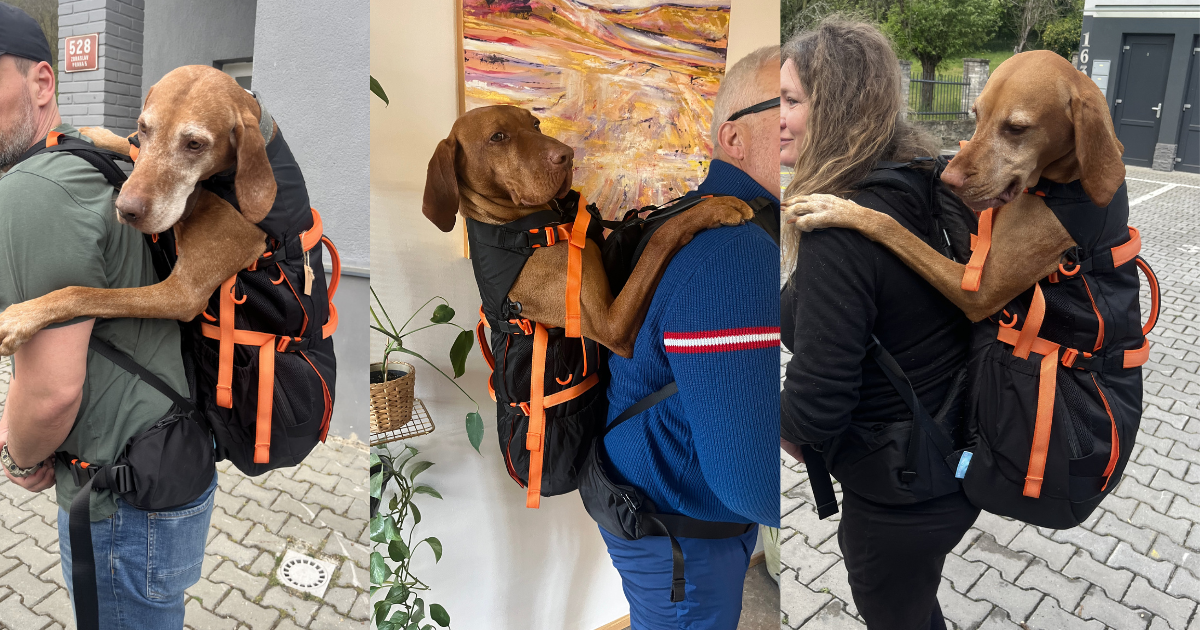
The backpack doesn’t replace exercise. It’s only for the stretches your dog couldn’t manage on his own or where he’d hurt himself:
- stairs in an apartment building without an elevator
- a rocky section, a footbridge or a steep descent on a hike
- the way back when your dog is done
- getting from the car or a bus stop to a place where you can walk in peace
- recovery after surgery, when the dog isn’t allowed to walk but needs to get outside
This way an old dog can keep going on trips. He walks most of the route himself, and when he can’t, he rides on your back.
How to use the backpack responsibly
Ideally your dog should spend 20 to 30 minutes in the backpack, 40 minutes at most. Then he needs a break: stretch, sniff around, have a drink. For dogs with spinal problems or after surgery, always ask your vet first whether carrying is suitable and for how long.
Think about yourself too. Carrying 40 kilos on your back is demanding even for someone who trains. Start with short stretches and get your dog used to the backpack at home before you head out.
Frequently asked questions
At what age do large dogs start having joint problems?
It depends on the breed and genetics. Dysplasia can show up in puppies, arthritis usually from middle age. For large breeds it’s worth having the joints checked from around six years old.
Should a dog with arthritis go for walks?
Yes, movement is important for him. Go for shorter, more frequent walks on soft, flat ground and avoid sudden sprints and jumps.
Can a dog with dysplasia use stairs?
Occasionally, yes, but repeated stair climbing is hard on the joints, especially going down. If you live on an upper floor without an elevator, it’s good to have a plan for making the stairs easier for your dog.
If your large senior is starting to hesitate in front of the stairs or the car, don’t wait for it to get worse. Book a joint check-up, and in the meantime walk through your usual routes and find the spots where you can give him a hand.